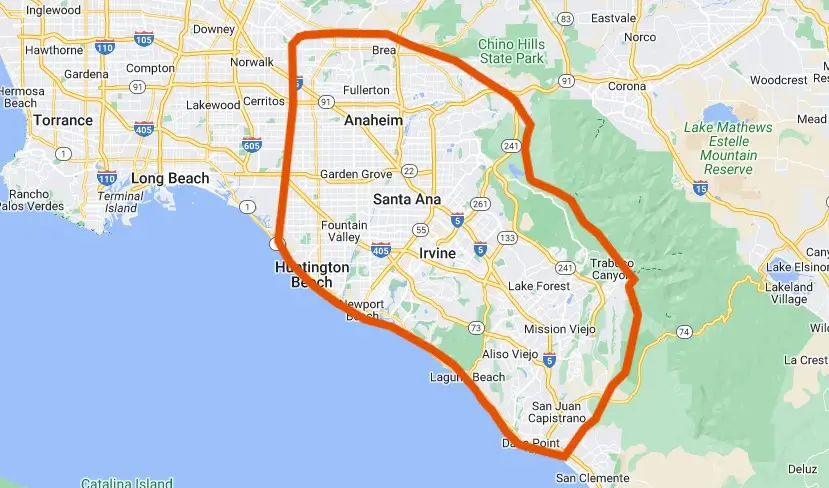

A pizzeria in Costa Mesa called with a walk-in cooler that had stopped working, with a full stock of perishables inside. We arrived the same day and found two faults: refrigerant was low and the compressor start relay had failed. The box was back down to temperature before lunch service.
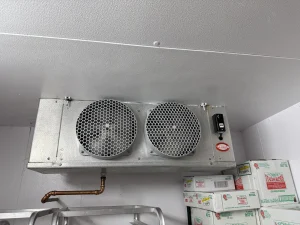
A walk-in going down is the most time-critical call in commercial refrigeration. Unlike a reach-in, you cannot move the contents into another unit. For a restaurant it is a stock loss clock running from the moment the temperature starts to climb.
That is why this one was treated as same-day regardless of schedule.
What was wrong with the walk-in?
Low refrigerant. The system runs on R-22, and the charge had dropped below the level needed to cool effectively. Refrigerant does not get consumed in normal operation, so low charge always means it escaped somewhere, which is why a leak check comes before any recharge.
A failed compressor start relay. The start relay gives the compressor the initial kick it needs to begin running. When it fails, the compressor either does not start or trips out on overload almost immediately.
Both faults are common on older commercial refrigeration in high-usage environments. A restaurant walk-in runs far more cycles per day than most equipment, and the components that see the highest electrical load wear first.
How did we fix it?
We checked the system for leaks first, then recharged with R-22 and replaced the faulty start relay. With a proper charge and a working relay the compressor ran smoothly again.
The temperature began dropping within minutes and the box was stable in time for lunch service.
Checking for leaks before recharging is not a formality. Putting refrigerant into a leaking system means the customer pays for gas that vents to atmosphere and calls again in a few weeks.
What R-22 owners should know
R-22 is no longer produced or imported in the United States. Systems that run on it can still be serviced, but only from reclaimed and existing stock, and the price of that stock has climbed steadily.
The practical consequence is that a leaking R-22 system gets more expensive to maintain every year. A small annual top-up that was once trivial is now a real line item.
For a business running an older R-22 walk-in, the sensible plan is to fix leaks properly rather than top up repeatedly, and to budget for eventual conversion or replacement rather than being forced into it during a breakdown.
None of that means replacing a working system today. It means knowing that the calculation changes each time the same unit needs gas.
FAQ
Why did my walk-in cooler stop cooling?
The two most common causes on an older commercial unit are low refrigerant from a leak and an electrical fault in the compressor’s starting components. A failed start relay stops the compressor from running at all, while low refrigerant leaves it running without producing enough cooling.
Can R-22 systems still be serviced?
Yes, but only from reclaimed and existing stock, since R-22 is no longer produced or imported in the United States. Servicing remains possible and legal, and the cost of the refrigerant itself has risen substantially, which changes the economics of repeatedly topping up a leaking system.
How fast can a walk-in cooler be repaired?
When the fault is in the refrigerant charge or the starting components and the parts are on the van, same-day is realistic. This Costa Mesa job was diagnosed and repaired in one visit, with the temperature stabilising before the restaurant’s lunch service.
Related repairs and services
- Commercial appliance repair in Orange County
- Vulcan walk-in refrigerator repair in Costa Mesa
- Appliance repair in Costa Mesa
- All repair stories
Need the same job done? Call (949) 544-5550 or book online. Same-day service across Orange County.