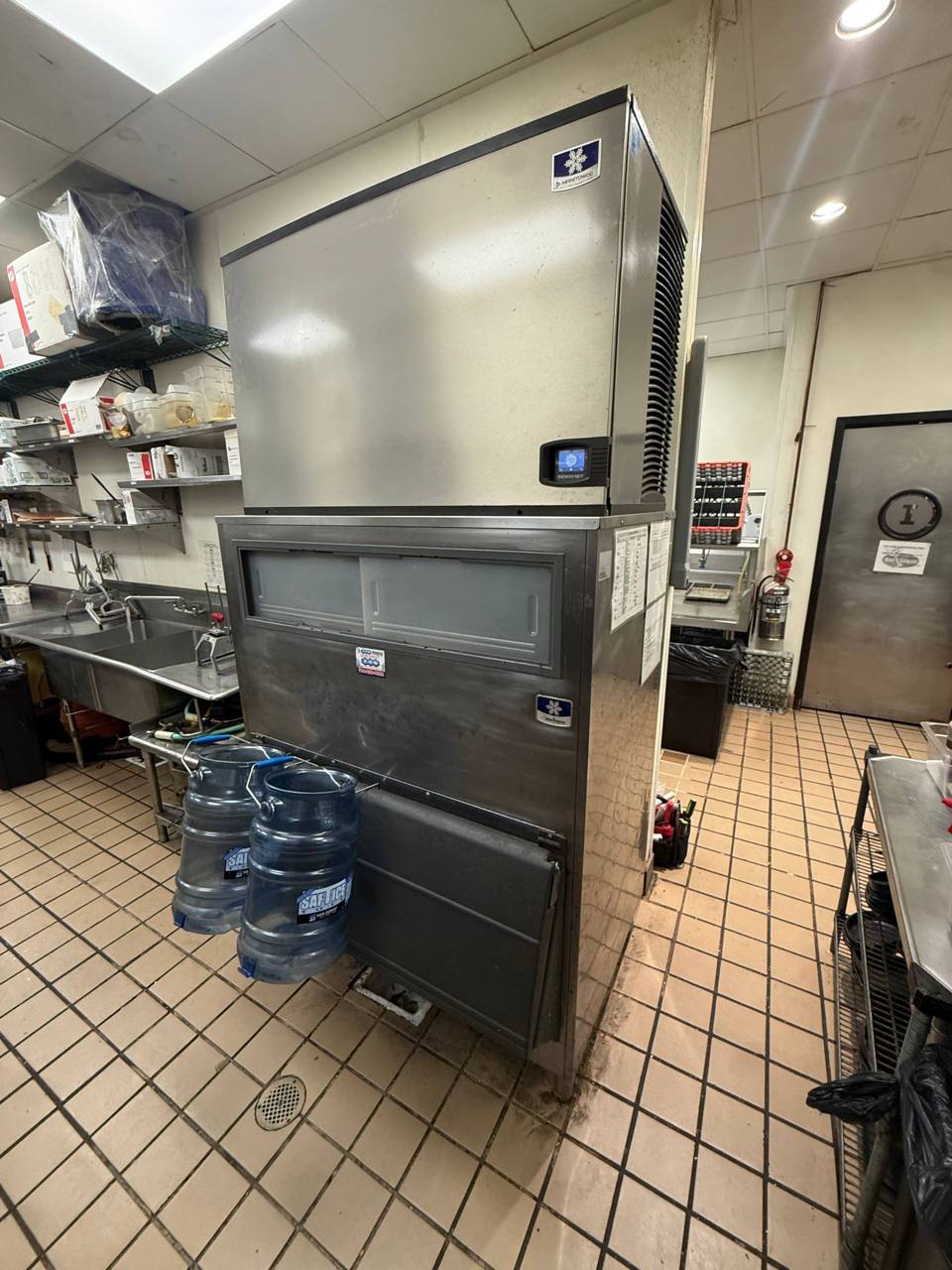
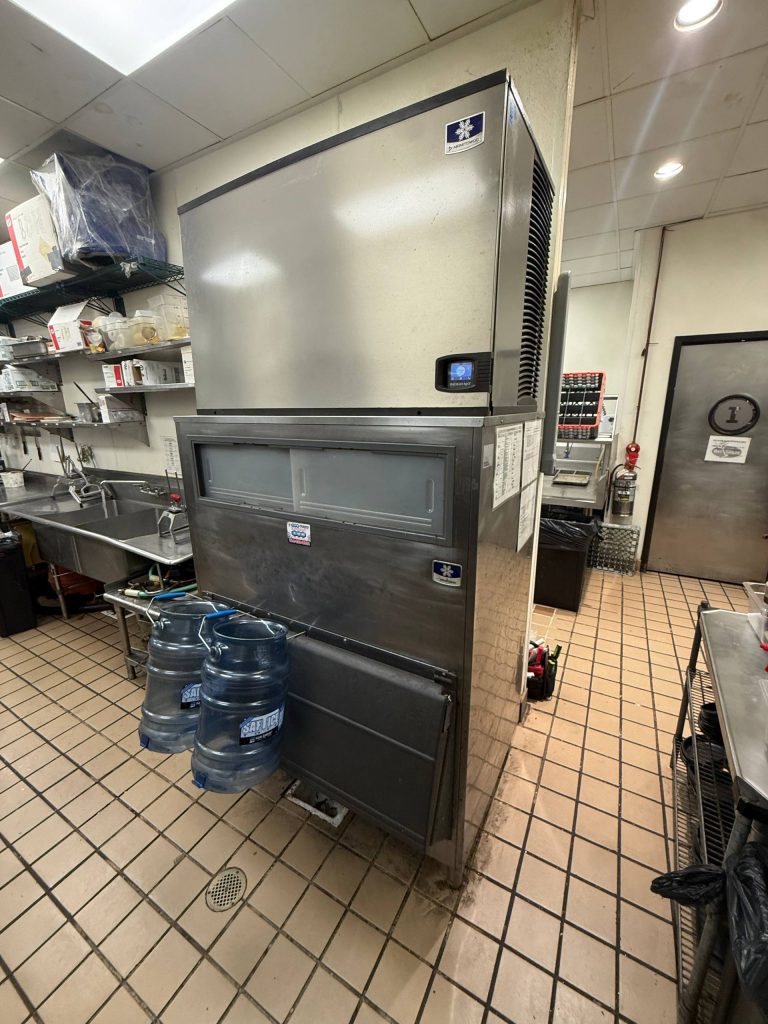
A commercial ice maker that stops making ice often has a dirty condenser, not a refrigerant problem. On this Irvine restaurant call, the condenser was clogged and just needed cleaning. A previous company had added refrigerant instead, which left the system with an unknown charge and made the repair more complicated than it had to be.
If your machine has stopped producing ice, the answer in most cases is airflow. A restaurant in Irvine called me with exactly this complaint, and I’ll walk through what I found, because it shows both the common cause and a common mistake.
Why does a commercial ice maker stop making ice?
The most frequent reason is a dirty condenser. The condenser is the part that dumps heat out of the system, and in a restaurant kitchen it collects grease and dust fast. Once it clogs, the machine can’t reject heat, pressures climb, and ice production drops or stops entirely. That was the diagnosis here: the condenser was dirty, and a proper cleaning was all the machine originally needed.
Can adding refrigerant fix an ice maker that won’t make ice?
No, and this job is a good example of why. Before I arrived, another company had looked at the same machine. Instead of cleaning the condenser, they added refrigerant. A dirty condenser can mimic a charge problem on the gauges, so an inexperienced tech reaches for the freon. But the machine wasn’t low. The result was a system with an unknown amount of refrigerant inside, which is a worse starting point than the original fault.
Refrigeration systems are designed around a specific charge. Once someone adds an unknown quantity on top of it, you can no longer trust the readings, and the extra refrigerant itself can hurt performance.
How did I fix this ice machine?
The underlying fix was cleaning the condenser. With the coil clean, the machine could shed heat the way it was designed to. I also had to deal with the refrigerant charge, since there was no way to know how much the previous company had put in, and a guessed charge can’t just be left in the system.
Sealed refrigerant work is not a DIY job. It requires licensed handling and proper equipment, so if your machine’s problem goes beyond a dirty coil, call a professional.
What can a restaurant owner check before calling?
Look at the condenser. If you can see the coil and it’s coated in dust and grease, that’s very likely your problem, and regular cleaning will prevent the shutdown in the first place. Also make sure nothing is blocking airflow around the machine. Anything beyond that, especially anything involving the refrigerant circuit, should wait for a technician.
FAQ
How often should a commercial ice maker condenser be cleaned?
In a restaurant kitchen, condensers clog much faster than in other environments because of airborne grease. Grease binds dust to the coil and ordinary dusting won’t remove it. Putting condenser cleaning on a regular maintenance schedule is far cheaper than a no-ice emergency during service hours, and it protects the compressor, which works harder and runs hotter whenever the coil is restricted.
Does a commercial ice maker lose refrigerant over time?
No. A sealed refrigeration system does not use up refrigerant. If the charge is actually low, there is a leak that needs to be found and repaired, and topping it off only masks the problem. If a tech proposes adding refrigerant without identifying a leak or checking basics like condenser condition first, ask questions before agreeing to the work.
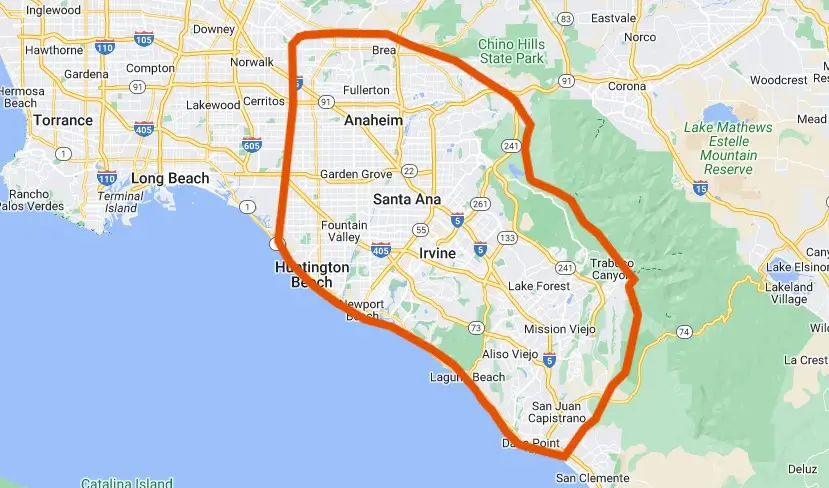
Do you repair commercial ice machines in Irvine?
Yes, this repair was done at a restaurant in Irvine, and commercial ice machines are part of my regular work. If your machine has stopped making ice, or another company has already worked on it and it still isn’t running right, I can diagnose it properly, starting with the simple causes before anyone touches the sealed system.
If your commercial ice maker is not making ice, call us and we’ll get it diagnosed correctly the first time.