
A dryer had stopped drying clothes efficiently. What looked like one problem turned out to be three: the igniter had burned out, the flame sensor that caused it to fail was faulty, and the ventilation system was clogged. All three had to be dealt with for the repair to hold.
Poor drying performance is the most under-reported appliance fault we see. The machine still runs and clothes eventually dry, so people adapt by running two cycles instead of calling.
That habit is expensive twice over: in energy, and in the wear it puts on a machine running longer and hotter than it should.
What was wrong with this dryer?
The igniter had burned out. On a gas dryer, the igniter glows hot to light the gas at the burner. Without it there is no heat at all.
The flame sensor had failed. This is the part that made the first fault inevitable. The sensor confirms a flame is present, and when it fails the ignition sequence keeps cycling until the igniter burns out. Replacing the igniter alone would have destroyed the new part the same way.
The ventilation system was clogged. Lint and debris were blocking airflow, so hot moist air could not leave the drum. That alone lengthens drying times, and combined with the heat problem it explains why the machine had become so ineffective.
How did we fix it?
We replaced the igniter and the flame sensor together, since the sensor was the underlying cause, and thoroughly cleaned the ventilation system to restore airflow.
Order of work matters here. Restoring heat without restoring airflow gives you a machine that runs hot with nowhere for the moisture to go, which is both inefficient and a safety concern.
After all three items the dryer returned to normal cycle times.
Why a blocked vent is more than an efficiency problem
Restricted airflow makes the machine run hotter than designed. That heat sits next to accumulated lint, which is highly combustible, and it is why dryer fires remain a leading cause of household fires in the United States.
It also shortens the life of the heating components. An element or burner working against a blocked vent runs at the top of its range constantly.
If a load that used to take forty minutes now takes ninety, the vent is the first thing to check, not the last.
FAQ
Why is my dryer taking two or three cycles to dry a load?
Either the machine is not generating enough heat, or moist air cannot escape. A failed igniter or flame sensor causes the first, a blocked vent causes the second, and it is common to find both together, as in this repair.
Why does the flame sensor need replacing with the igniter?
Because the sensor is usually the underlying cause. When it fails to confirm a flame, the ignition sequence keeps cycling until the igniter burns out. Fitting a new igniter without replacing the sensor destroys the new part the same way.
How dangerous is a clogged dryer vent?
Seriously enough that it is a leading cause of household fires in the United States. A restricted vent makes the machine run hotter than designed, and that heat sits alongside accumulated lint. Long drying times are the warning sign most people ignore.
Related repairs and services
- Washer and dryer repair in Irvine
- LG dryer not heating: igniter and flame sensor
- Dryer fire hazard: gas valve and blocked vent
- All repair stories
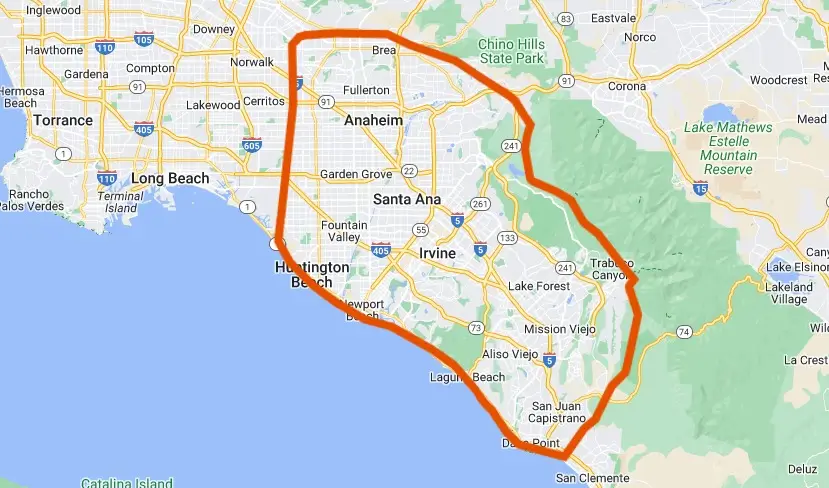
Need the same job done? Call (949) 544-5550 or book online. Same-day service across Orange County.