
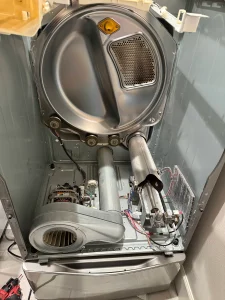
A Newport Beach customer reported a dryer making a loud noise, but the machine ran quietly when our technician arrived. Replacing the worn rollers did not solve it. The real cause was a damaged blower wheel that only vibrated once the dryer had been running for more than five minutes.
Intermittent faults are the hardest kind. A machine that misbehaves reliably can be diagnosed in minutes. A machine that behaves perfectly while you watch it can cost two visits, which is what happened here.
On the first call the dryer ran quietly. Everything sounded normal. Based on the customer’s description and the age of the machine, worn rollers were the reasonable suspect, so we replaced all the internal rollers. The dryer worked fine.
Why the first repair did not hold
The next day the customer called again. The noise was back.
On the second visit we did the one thing that had not been done: we ran the dryer for more than five minutes without stopping. That is when the sound appeared. It was loud, and it seemed to come from everywhere at once, which initially pointed at the motor.
The reason it only showed up after five minutes matters. Some faults only appear once parts have heated and expanded, or once a component has built up enough rotational speed and load to start vibrating. A two-minute test cycle will never find them.
What was actually wrong?
The blower wheel was damaged. On inspection it looked acceptable, which is why it had not been flagged the first time. Under load it was out of balance, and that vibration transmitted through the whole cabinet, making the machine sound as though the motor was failing.
The blower wheel pulls air through the drum and pushes it out through the vent. A damaged one does not just make noise, it also moves less air, which means longer drying times and a hotter machine.
How did we fix it?
We replaced the blower wheel and ran the dryer through a full extended cycle to confirm the fix under real conditions rather than a short test. It ran smooth and quiet.
The lesson from this job is about test length, not parts. If a technician runs a machine for two minutes and declares it fixed, an intermittent fault will survive the visit. Ask for a full-length test when the complaint is a noise that comes and goes.
FAQ
Why does my dryer only get loud after a few minutes?
Faults that depend on heat or sustained load will not appear in a short test. A damaged blower wheel is a common example: it looks fine at rest, but once it is spinning under load it goes out of balance and vibrates. Diagnosing this kind of noise requires running the machine for at least five to ten minutes.
Is it the motor or the blower wheel making the noise?
They sound very similar, because vibration from an unbalanced blower travels through the cabinet and seems to come from everywhere. In this Newport Beach job the noise was initially read as a motor fault. The distinction matters because a blower wheel is a far cheaper part than a motor.
Can a bad blower wheel affect drying time?
Yes. The blower moves air through the drum and out the vent, so a damaged one reduces airflow. Clothes take longer to dry and the machine runs hotter, which puts extra strain on the heating element. Noise is often the first symptom people notice, but it is rarely the only effect.
Related repairs and services
- Washer and dryer repair in Irvine
- Appliance repair in Newport Beach
- Dryer loud noise and fire hazard in Irvine
- All repair stories
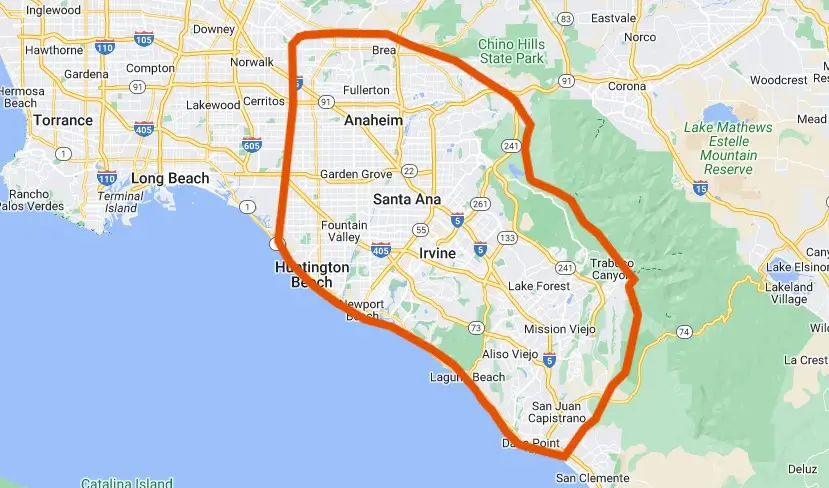
Need the same job done? Call (949) 544-5550 or book online. Same-day service across Orange County.