
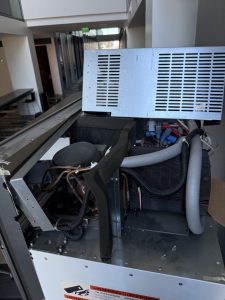
A local police department called about a GE Monogram refrigerator that was no longer cooling properly. The cause was a refrigerant leak, unusual on a unit only twelve years old. Condenser maintenance, a recharge and a sealant treatment brought it back to full performance.
In a workplace, a refrigerator that runs warm is a food safety problem, not an inconvenience. Product has to be discarded and the unit taken out of use until it holds temperature reliably.
The complaint was gradual: still running, still cold to the touch, but no longer holding the temperature it should.
What was wrong with this GE Monogram?
There was a refrigerant leak in the sealed system. It was minor, but a sealed system does not tolerate minor. Refrigerant is what carries heat out of the cabinet, and even a small loss drops cooling capacity measurably.
Twelve years is early for this. Sealed systems are built to outlast the rest of the appliance, and leaks at that age usually trace back to vibration wear at a joint or corrosion rather than a manufacturing fault.
The symptom pattern is worth knowing: a leaking system usually still runs and still feels cold, it simply cannot reach or hold the set temperature. That is different from a compressor failure, where cooling stops outright.
How did we fix it?
Three steps, in order. First, full condenser maintenance to restore airflow and system efficiency, because a dirty condenser masks and worsens every other symptom. Second, a sealant treatment to close the minor leak and stop further refrigerant loss. Third, a proper recharge to bring refrigerant back to the correct level.
The order matters. Recharging a system that still leaks or that cannot reject heat properly means doing the job twice.
With the system sealed and recharged the refrigerator holds temperature correctly again, and on a unit of this build quality that should mean another decade of service.
When a refrigerant leak is worth repairing
On a premium built-in unit, almost always. The cabinet, compressor and controls on a Monogram are built to a standard that justifies sealed system work, and the alternative is replacing a unit that is integrated into cabinetry.
On an inexpensive freestanding refrigerator past ten years, the calculation is different and replacement often wins.
Either way, a system that will not hold temperature should be diagnosed rather than left running. A compressor working continuously against low refrigerant is how a repairable fault becomes a replacement.
FAQ
Why is my refrigerator running but not staying cold?
When the unit runs and feels cool but cannot hold its set temperature, low refrigerant from a leak is a leading cause, along with a blocked condenser restricting heat rejection. A compressor failure usually stops cooling outright rather than degrading it gradually.
Can a refrigerant leak be repaired, or does the fridge need replacing?
Minor leaks can often be treated with a sealant and a recharge, which is what was done here. On a premium built-in refrigerator that is well worth doing. On an inexpensive freestanding unit over ten years old, replacement is often the better economics.
How long should a GE Monogram refrigerator last?
These are built to last well past a decade, which is why a refrigerant leak at twelve years is early rather than expected. With the system sealed and recharged, and the condenser maintained, this one should give another ten years of service.
Related repairs and services
- Refrigerator and freezer repair in Irvine
- Sub-Zero refrigerator not cooling: evaporator leak
- GE Monogram microwave not heating
- All repair stories
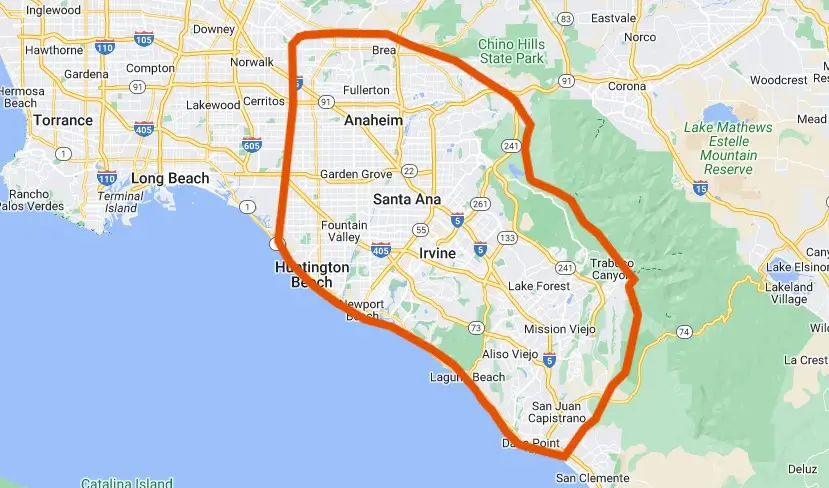
Need the same job done? Call (949) 544-5550 or book online. Same-day service across Orange County.