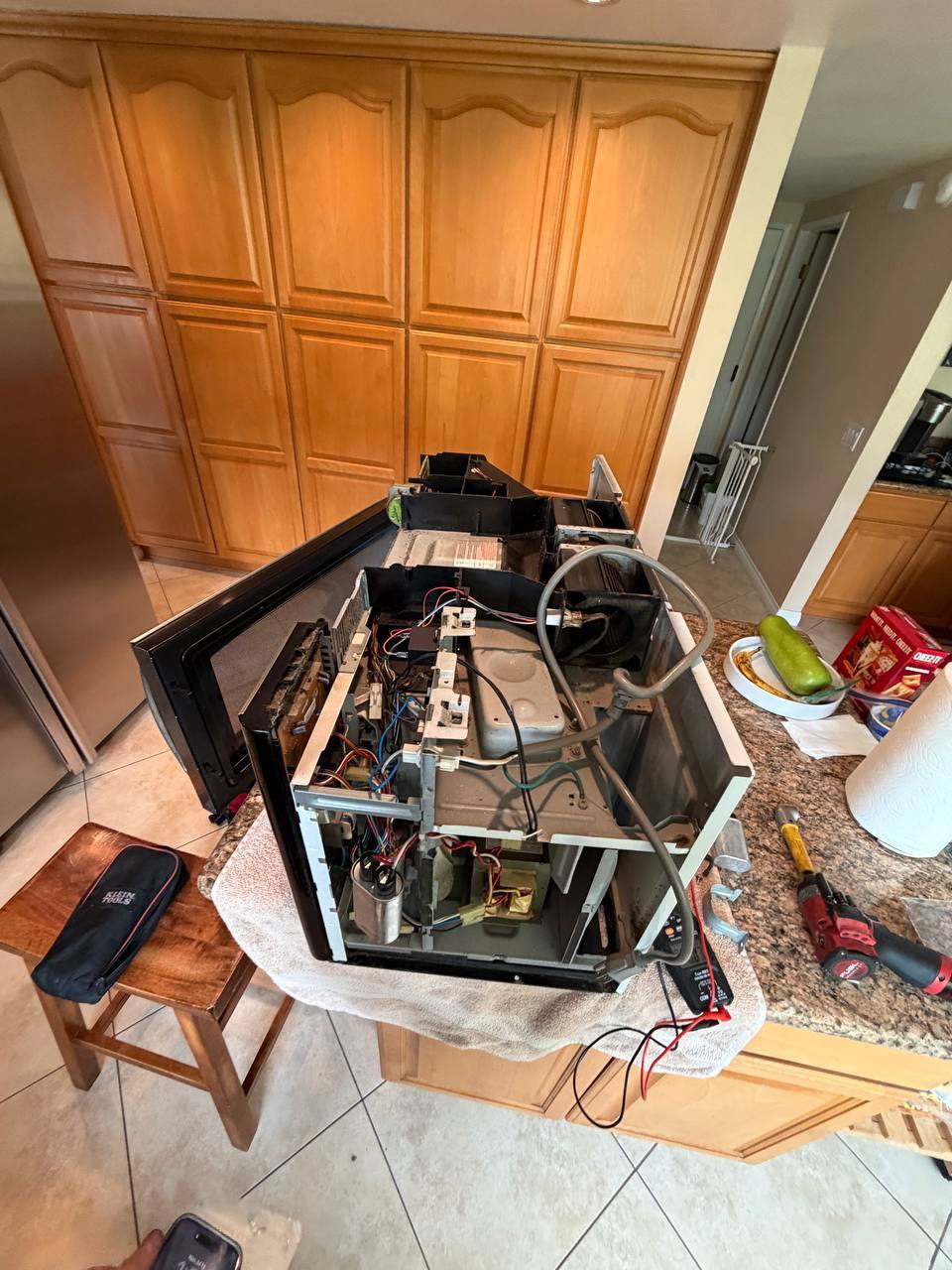
A GE Monogram microwave not heating — while the light, fan, and turntable still work — usually means a failure in the high voltage circuit: the magnetron, the high voltage diode, or the capacitor. On this job, the magnetron had died, and I replaced it along with the diode and capacitor to restore full heating.
The customer’s words on the phone were simple: “It runs, it hums, the plate spins, but my food comes out cold.” That’s one of the most common microwave complaints I get, and it’s almost never the control board or the door switch when everything else behaves normally. The unit in question was a built-in GE Monogram, about 20 years old. That age matters, and I’ll explain why.
Why is my microwave running but not heating?
When a microwave runs but doesn’t heat, the problem is almost always in the high voltage section — the part of the machine that actually generates the microwaves. Everything else (the light, the fan, the display, the turntable motor) runs off a separate low-voltage circuit, which is why the microwave can look perfectly alive while producing zero heat.
Based on what I see in the field, here’s how I’d rank the likely causes for this exact symptom:
- Failed magnetron. This is the tube that actually cooks your food. Magnetrons wear out, and on a unit that’s been in service for two decades, this is the first suspect. When it goes, the microwave does everything except the one thing you bought it for.
- Blown high voltage diode. The diode works together with the capacitor to feed the magnetron. When it fails, same symptom — runs, doesn’t heat. It’s a cheap part, but it lives in a dangerous neighborhood inside the cabinet.
- Bad high voltage capacitor. Less common as the sole culprit, but it degrades over time, and a weak capacitor puts stress on the other two components.
Those three parts work as a team. And when one fails on an older unit, I don’t like leaving the other two in place on faith. More on that below.
What was actually wrong with this GE Monogram
Diagnosis pointed straight at the magnetron. Once I had the unit open and tested the high voltage circuit, the magnetron was clearly done — no output at all.
Here’s the judgment call I made, and I’ll be honest that it is a judgment call: I replaced the high voltage diode and the capacitor at the same time, not just the magnetron. On a 20-year-old machine, the diode and capacitor have taken twenty years of stress cycles right alongside the magnetron. Putting a brand-new magnetron on tired supporting components is asking for a callback in six months. Replacing all three while the cabinet is already open costs the customer far less than a second visit later.
I won’t pretend this one was easy. GE Monogram built-ins from that era are not designed with the repair tech in mind. Getting to the magnetron meant working in a tight cavity where my hands barely fit, and the mounting position made the swap slow and awkward. Just the replacement itself took a solid two hours. On most countertop microwaves, the same job goes much faster. But that’s the trade-off with built-in units — they look clean in the kitchen and fight you on the workbench.
Once everything was in, I tested the unit properly. Full heat, back to normal. The customer was happy, and honestly, on a Monogram that’s been running for 20 years, that repair was worth making. These units were built to last, and this one clearly has more life in it.
What can you safely check yourself?
You can safely check the basics from the outside — and only from the outside. Here’s what’s fair game:
- Try heating a cup of water for one minute. If the water stays cold but the microwave runs normally, you’ve confirmed a heating problem, not a user error or a bad setting.
- Check that you’re not accidentally in a timer or low-power mode. It happens more than people admit. No shame in it.
- Make sure the door closes firmly. A door that doesn’t latch fully can prevent heating on some models, though usually the unit won’t run at all in that case.
Here’s what you should not do: open the cabinet. I mean this seriously. The high voltage capacitor inside a microwave can hold a lethal charge even after the unit has been unplugged for days. This is not like changing a light bulb or a furnace filter. Microwave internals are one of the few places in appliance repair where a mistake doesn’t cost you money — it can cost you your life. If your microwave runs but doesn’t heat, the fix is inside that high voltage section, and that section belongs to someone with the training and the tools to discharge it safely.
Is a 20-year-old microwave worth fixing?
Sometimes, yes — and this job is a good example. A built-in GE Monogram isn’t a $90 countertop unit you toss and replace. Swapping a built-in often means matching trim kits, cabinet cutout dimensions, and finishes, and that gets expensive fast. If the rest of the machine is solid — and this one was — replacing the magnetron, diode, and capacitor brings it back for a fraction of the cost of a new built-in plus installation. On a cheap countertop model, I’d usually tell you the opposite. It depends on the unit, and a good tech will tell you honestly which side of the line yours falls on.
FAQ
Why does my microwave run but not heat the food?
The most likely cause is a failure in the high voltage circuit — the magnetron, the high voltage diode, or the capacitor. These components generate the actual microwave energy, while the light, fan, and turntable run on a separate circuit, which is why everything else seems fine. On older units, the magnetron is the most common failure. Diagnosing which component failed requires opening the unit, which should only be done by a professional.
Can I replace a microwave magnetron myself?
I strongly advise against it. The high voltage capacitor inside a microwave can store a lethal electrical charge even when the unit is unplugged, and it sits right next to the magnetron you’d be trying to reach. Discharging it safely requires the right tools and training. This is one repair where the risk isn’t a broken appliance — it’s serious injury or worse. Call a professional for anything inside the microwave cabinet.
How long does a microwave magnetron replacement take?
It depends heavily on the unit. On a typical countertop microwave, it’s a relatively quick job. On built-in models like the GE Monogram I repaired, access is much tighter and the replacement itself took me a full two hours. Built-in units are designed to look seamless in cabinetry, not to be easy to service, so expect the labor time to reflect that when you’re getting a quote.
Microwave not heating? Get it diagnosed properly
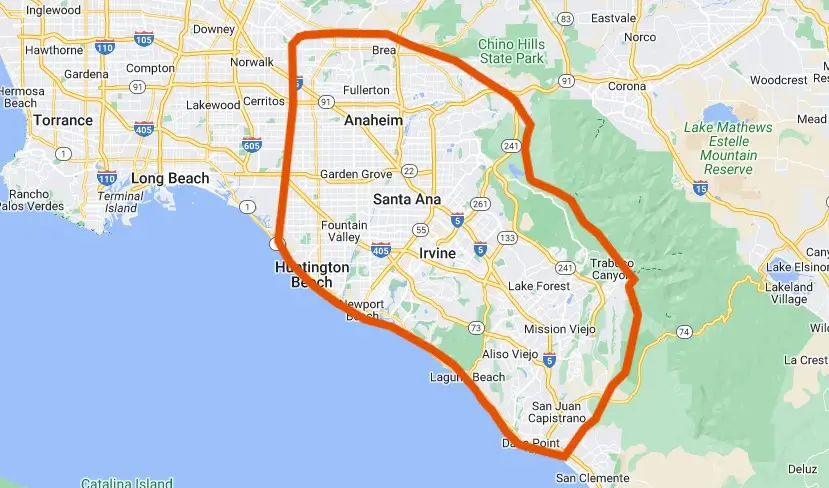
If your microwave runs but comes up cold — whether it’s a GE Monogram built-in or any other brand — don’t guess and don’t open it up. Give us a call, and I’ll diagnose the high voltage circuit safely, tell you honestly whether the repair is worth it, and get it heating again if it is.