Commercial dishwasher repair across Orange County, same day, Monday to Saturday. Undercounter, door-type and conveyor dish machines, glasswashers and booster heaters from Hobart, CMA, Jackson, Champion, Insinger, Meiko, Moyer Diebel, Noble and other brands, for restaurants, cafes, bars, hotel kitchens, schools and senior-living kitchens. The service call is $79 and is applied to the repair when you approve it, and you get a firm written price before any work starts.
A dish machine that does not sanitize is a health-code problem as much as a dish-room problem. A high-temperature machine has to deliver a 180°F final rinse so the dish surface reaches 160°F; a low-temperature machine depends on a chemical feed that puts 50 ppm of chlorine in the final rinse. When the booster heater, the rinse thermostat or the chemical pump fails, the machine looks like it is working and the inspector’s thermometer or test strip says otherwise. We repair the heaters, thermostats, pumps, valves, door switches, conveyor drives and controls that cause these calls, and we leave you with a machine that reads right on the gauge.
Dish machines we repair
- Undercounter dishwashers and bar glasswashers, high-temp and low-temp
- Door-type (hood-type, single-rack) machines, straight-through and corner installations
- Rack conveyor machines, and the booster heaters built into or beside them
- Booster heaters: Hatco, Hobart and built-in boosters that feed the final rinse
- Pot and pan washers and utensil washers
- Chemical feed pumps and dispensers on owned low-temp machines
Common commercial dishwasher problems and how we fix them
Final rinse not reaching 180°F
Likely causes: a failed booster heater element or contactor, a booster thermostat or high-limit that tripped, scale on the elements, low incoming water temperature from the building water heater, or a flow problem that moves water through the booster too fast to heat.
Try this first: read the rinse gauge during a full cycle, not just at idle. Check that the building hot water reaching the machine is at least 110°F for a high-temp unit, and look for a tripped reset button on the booster.
How we fix it: we test the elements and the contactor, replace the thermostat or high-limit, delime the booster and verify rinse temperature with a thermometer on the rack, not just the gauge.
Wash tank not heating, or dishes come out greasy
Likely causes: a failed tank heater element or thermostat, a tripped high-limit, a wash arm clogged with food and scale, a weak wash pump motor, or detergent not feeding.
Try this first: clean the wash arms and the scrap screens, check the detergent container and the tube, and confirm the tank thermometer reads 150°F to 160°F on a high-temp machine.
How we fix it: we replace the element, thermostat or high-limit, repair the wash pump, and tell you if the chemical company’s dispenser is the problem on a leased feed.
Machine will not fill, or overfills and floods
Likely causes: a failed fill solenoid valve, a stuck float or failed level sensor, a clogged inlet strainer, a vacuum breaker problem, or a drain valve that does not close.
Try this first: make sure the water supply valve is fully open and the drain ball valve or standpipe is seated. A machine that overflows at the door usually has a stuck float.
How we fix it: we replace the solenoid, float, sensor, strainer or drain valve and set the fill level.
Machine will not drain
Likely causes: a failed drain pump or drain valve, a scrap screen that was removed and let debris into the pump, a clogged drain line or floor sink, or an air gap problem.
Try this first: clear the scrap screens and look for standing water in the floor sink the machine drains into; a backed-up floor sink is a plumbing problem, not the machine.
How we fix it: we clear or replace the drain pump or valve and the line to the floor sink.
Will not start, door switch or cycle problems
Likely causes: a failed door switch or magnet, a failed timer or control board, a tripped motor overload, a failed start relay or contactor, or a low-water lockout.
Try this first: close the door or hood firmly and check that the machine shows power. Press the reset on the motor overload once if the machine hums and stops.
How we fix it: we test the switch, timer, relays and motor and replace the failed part.
Conveyor not moving, or leaks from the door and base
Likely causes: a conveyor drive motor, gearbox, pawl bar or overload clutch; a jammed rack or torn curtain on a conveyor; a door gasket, pump seal, drain valve or hose on any machine.
Try this first: clear any jammed rack and check the curtains. For a leak, note where the water appears during the cycle.
How we fix it: we repair the drive and clutch, replace gaskets, seals, hoses and valves, and set the door so it closes square.
What commercial dishwasher repair costs
The service call is $79. That covers the trip and the on-site diagnosis, and it is applied to the repair when you approve it. After the diagnosis you get a written price for parts and labor, and that price does not change once the work starts. Thermostats, high-limits, door switches, solenoid valves, floats and gaskets are the affordable end. Heater elements, drain pumps and contactors are the middle. Wash pump motors, booster heaters, conveyor drives and control boards are the expensive end, and we tell you where your repair sits before ordering. If a machine is not worth repairing, we say so and you pay only the $79.
| Repair | Typical price, parts and labor |
|---|---|
| Rinse or wash thermostat and high-limit | $250 to $500 |
| Wash or rinse heater element | $350 to $800 |
| Wash pump motor | $500 to $1,200 |
| Rinse booster heater element or relay | $350 to $800 |
| Door switch, timer or control board | $300 to $900 |
| Fill valve, float or drain valve | $250 to $550 |
| Chemical pump (detergent, rinse aid, sanitizer) | $250 to $600 |
| Descale and water-system service | $250 to $500 |
Typical Orange County ranges for parts and labor on common models; the service call is $79 and is applied to any of them. Built-in, professional and commercial units, and parts that have to come from the manufacturer, can run higher. You get the exact written price after the diagnosis and before any work starts.
Owned versus leased machines
Many Orange County restaurants run a low-temp machine owned by their chemical company, serviced under the chemical contract. If your machine has a chemical company’s sticker on it, call them first; the contract usually covers the repair. We repair owned machines of every brand and owned booster heaters, and on the phone we will tell you which situation you are in before you pay for a visit.
Scale, deliming and keeping the gauge right
Orange County water scales booster elements, wash tank heaters and rinse nozzles. A dish machine in a busy kitchen needs deliming on a schedule, clean scrap screens every shift, and curtains and wash arms that actually come out and get rinsed. Most of the “not heating” and “not cleaning” calls we take are a machine that was never delimed. We can set up a deliming and inspection visit on a schedule that fits your volume; ask when you book.
How a commercial dishwasher service call works
- Call. Call (949) 544-5550 or book online, and tell us the machine type, the brand and what the gauge or test strip says.
- Diagnose on site. We run a full cycle, check fill, wash and rinse temperatures with a thermometer, test the heaters, valves, pumps and controls, and work around your dish room.
- Written price. You approve the parts and labor before work starts. The $79 service call is applied to it.
- Repair. Thermostats, switches, valves, floats, gaskets and many elements are on the van; wash motors, boosters and boards come from local distributors, usually the next business day.
- Warranty. Parts and labor on the repair are under warranty. If the same problem comes back within 90 days, the return visit has no service-call fee. The invoice documents the repair for your health inspection file.
Brands we service
Hobart, CMA, Jackson, Champion, Insinger, Meiko, Moyer Diebel, Noble, American Dish Service, Stero, Fagor, Eurodib, Lamber, Jet-Tech and Hatco boosters.
Service area
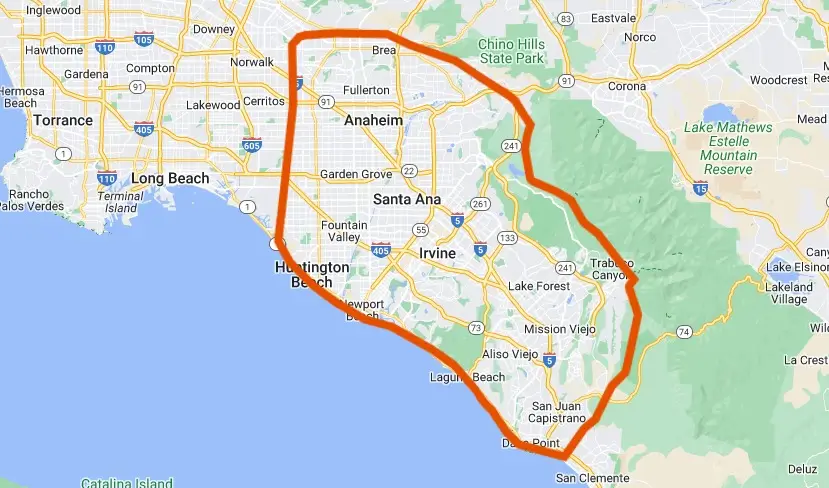
Based in Irvine, covering the whole of Orange County: Irvine, Costa Mesa, Tustin, Santa Ana, Anaheim, Newport Beach, Huntington Beach, Orange, Fullerton, Laguna Beach and every other city in the county.
Commercial dishwasher repair FAQ
How much does commercial dishwasher repair cost in Orange County?
The service call is $79 and is applied to the repair. Thermostats, switches, valves and gaskets are the affordable end; elements and drain pumps the middle; wash motors, boosters and boards the expensive end. You approve a written price before any work starts.
Why is my dish machine not reaching 180°F?
Usually a failed booster element or thermostat, scale on the elements, or building hot water that is too cold going in. We test the booster and the incoming water and fix the one that is wrong.
Do you repair Hobart dishwashers?
Yes, Hobart undercounter, door-type and conveyor machines, along with CMA, Jackson, Champion, Insinger, Meiko and the other commercial brands.
Do you service leased low-temp machines?
Machines owned by a chemical company are usually covered by that contract, and we will tell you so on the phone. We repair owned machines of every brand.
Do you repair bar glasswashers?
Yes, undercounter glasswashers and bar dish machines, including the small high-temp units behind bars and in cafes.
Can you come today? My dish machine is down during service.
Usually yes. Call rather than book online, and the call goes ahead of non-urgent work. Most dish machine repairs are finished on the first visit.