On an LG dishwasher, IE means it is not filling, OE means it is not draining, FE means it took in too much water, E1 and AE mean the leak sensor in the base is wet, LE is the wash motor, HE is the heater, tE is the temperature sensor and nE is the diverter that moves water between the spray arms. PF is a power interruption and CL is only the child lock. Switch the dishwasher off at the breaker for a few minutes, open the supply valve, check the drain hose and the filter, dry the base and run a cycle. A code that comes back after that usually means a failed part and needs a technician.
Written by a working technician at Cactus Appliance in Irvine, this guide covers the LG dishwashers we see across Orange County: the QuadWash and QuadWash Pro models, the TrueSteam models, the front-control LDF series and the top-control LDT and LDP series. LG uses the same two-letter code style on its dishwashers as on its washers, and several codes mean nearly the same thing on both.
Try this first
- Cut power at the breaker for five minutes. A one-time glitch stays gone; a real fault returns in the first minutes of the next cycle.
- Open the supply valve under the sink fully. Check the braided hose for a kink where it passes through the cabinet wall.
- Check the drain path. The hose should rise in a high loop under the counter before it reaches the disposal or the air gap. A recently installed disposal often still has its knockout plug in.
- Clean the filter. Twist out the cylinder filter in the floor of the tub, lift the mesh plate, rinse both and pick glass and seeds out of the sump.
- Dry the base. For E1 or AE, leave the door open and the breaker off overnight so the base pan can dry out.
- Use dishwasher detergent only, and not much. Foam trips bE on most models and can wet the leak sensor as well; a drop of hand soap on a plate is enough.
How LG dishwashers show errors
Models with a visible display show the code in place of the time. On top-control models the display is on the top edge of the door, so you have to open the door to read it; some of those also blink the small front light. The code clears when you press Power; unless the dishwasher is connected to the ThinQ app, write it down or photograph it before you clear it. tE is the temperature sensor, nE is the diverter, and E1 is the leak sensor on older lines where newer lines show AE for the same thing. Most LG dishwashers use a motorized diverter, the vario motor, to send water to the arms in turn; QuadWash models add two extra rotating arms on the lower spray arm, fed by the same motor. TrueSteam models add a steam generator to the heating system, so a heater fault on those lines can involve an assembly that plainer models do not have. Newer models also support Smart Diagnosis through the LG ThinQ app.
Water, drain and leak codes
| Code | What it means | What to do |
|---|---|---|
| IE | Inlet error: the dishwasher did not take in enough water in the time allowed. | Open the supply valve fully and straighten the hose. If IE returns with normal pressure at the kitchen faucet, the inlet valve or the screen inside it is the usual fault. |
| OE | Drain error: water is still in the tub after the drain pump has run. | Clean the filter and sump, check the hose for kinks and a high loop, and check the disposal knockout plug. If it still will not drain, the drain pump or a blocked check valve needs service. |
| FE | Overfill error: the water level rose above the maximum the sensor expects. | Close the supply valve. A dishwasher that fills with the power off has an inlet valve stuck open; one that overfills only while running has a level sensor or control fault. Either way, call. |
| E1 | Leakage error on earlier models: the sensor in the base pan is wet, or the dishwasher is tilted enough for water to reach it, or heavy foam ran over. | Cut power, let the base dry, run a cycle with the right detergent and watch the door and the sump for drips. A code that returns in a dry base is a sensor or wiring fault. |
| AE | Leakage error on newer models: the same wet-base condition as E1. | Same checks as E1. Water that keeps appearing with every cycle is a real leak, most often the door gasket, a sump seal or a hose clamp. |
| bE | Bubble error: too much foam in the tub, almost always the wrong detergent or too much of it. | Cut power, let the foam settle, rinse the tub and run again with dishwasher detergent only. If bE returns with the right detergent, call. |
Heater, motor and sensor codes
| Code | What it means | What to do |
|---|---|---|
| HE | Heater error: the water did not heat as expected (heater element, its relay on the main board or the wiring to it). | Power cycle once. If HE returns, the heater, its relay on the main board or the thermistor needs testing; this is not an owner repair. |
| tE | Thermal error: the temperature sensor reads open or short, or on many models the water came in hotter than the control allows. | Power cycle and check that the water heater is not set far above 120 degrees. If tE repeats with a normal supply, the thermistor or its wiring has failed, so call. |
| LE | Motor error: the wash (circulation) motor did not start, did not reach speed or drew too much current. | Cut power, clear the sump of anything that could jam the impeller, and retry. If LE repeats on an empty tub, the wash motor or its drive on the control has failed. |
| nE | Nozzle error: the motorized diverter that switches water between the spray arms, LG calls it the nozzle or vario motor, cannot reach or report its position. | Power cycle once and make sure the lower arm turns freely by hand. If nE returns, the diverter motor or its position sensor has failed. |
Power and lock messages
| Code | What it means | What to do |
|---|---|---|
| PF | Not a fault: the dishwasher lost power during a cycle and is telling you so. | Press Power to clear and start again. Repeated PF without an outage points to a loose plug or a weak breaker; a wiring connection inside the dishwasher needs a technician, so call. |
| CL | Not a fault: the child lock is on and the controls are ignored. | There is usually no button labeled Child Lock. Hold the button, or pair of buttons, marked with the padlock icon for about three seconds until CL disappears (Rinse and Spray together on many older models, Delay Start on many QuadWash models). |
Codes and their meaning vary by model and production year, and the same code can have more than one cause. The owner’s manual for your model number (on the label at the edge of the door) is the definitive list for your dishwasher. Only an on-site test confirms which part has failed, and we run that test on every visit before anything is ordered.
What the common codes turn out to be on a service call
OE: water in the bottom of the tub
Likely causes: a clogged filter and sump, a disposal knockout plug that was never removed, a hose without a high loop that lets the sink back-flow, a check valve stuck open with a seed in it, or a drain pump with a broken impeller or a dead winding.
Try this first: clean the filter, check the hose and the disposal connection, then run a short cycle and listen for the pump at the end.
How we fix it: we test the pump under power, clear the check valve and the hose, and replace the pump when it is the cause. The same drain system fails the same way on other brands: see Bosch Dishwasher E25 Error: The Drain Pump Fix and Why Is My Asko Dishwasher Not Draining?.
E1 and AE: the leak sensor is wet, but the floor is dry
Likely causes: a door gasket flattened at the bottom corners, a sump seal weeping a few drops per cycle, a loose hose clamp, a blocked spray arm nozzle sending water at the door seam, a dishwasher that no longer sits level, or foam from the wrong detergent.
Try this first: cut power, dry the base overnight, run a cycle with the correct detergent and look along the bottom of the door and the kick panel for drips.
How we fix it: we pull the unit, find the wet trail in the base pan, and replace the gasket, seal, hose or sensor that caused it. The code with a dry base and the sensor still tripping is the sensor or its harness.
IE and FE: no fill, slow fill, or far too much water
Likely causes: for IE, a supply valve not fully open, a kinked hose, a clogged inlet screen or a dead inlet valve coil; for FE, an inlet valve that will not close against grit on its seat, or a level sensor fooled by foam or grease.
Try this first: open the valve fully and listen at the start of the cycle for the hum of the inlet valve and the sound of water. For FE, run an empty cycle with dishwasher detergent only; if it still overfills, close the supply valve and call.
How we fix it: we measure the supply pressure, test the valve coil and the level sensor, and replace the inlet valve when it has failed; it is a common part and is usually on the van.
HE, tE and LE: heater, thermistor and wash motor
Likely causes: a heater with an open element, a thermistor that drifted, a main board relay that failed, or a wash motor that seized or lost a winding. A dishwasher that stops mid-cycle with no code is often the user-interface or main board instead.
Try this first: one power cycle. There is nothing more to do safely from outside.
How we fix it: we test the heater and thermistor resistance, check the relay output on the board and spin the pump by hand before anything is ordered. A circulation pump replacement on another brand is in KitchenAid Dishwasher Not Cleaning? Circulation Pump Fix, and a mid-cycle stop traced to the control is in GE Dishwasher Not Completing Cycle: UI Control Fix; LG units fail in the same places.
Stay safe. Switch the breaker off before you reach behind the kick panel or under the tub; the heater circuit and standing water share that space. Never bypass the door switch or the leak sensor to make a cycle run, and never run the dishwasher with the sump exposed. If you smell burning plastic or see scorching around the control panel, leave the breaker off and call.
When a code means a part has failed
The service call is $79 and covers the trip and the diagnosis. We confirm the failed part by testing it, because an OE can be a knockout plug or a pump and an AE can be a gasket or a sensor. You get a written price for parts and labor before any work starts, and the $79 is applied to that price when you approve it. Common parts such as drain pumps and inlet valves are usually on the van; others, such as heaters, wash motors, diverter motors and control boards, come from local distributors, usually the next business day. The repair is under warranty on parts and labor, and if the same fault returns within 90 days the return visit has no service-call fee.
Dishwasher repairs we have written up
- Why Is My Asko Dishwasher Not Draining? (October 2026), Orange County
- GE Dishwasher Not Completing Cycle: UI Control Fix (October 2026), Orange County
- Bosch Dishwasher E25 Error: The Drain Pump Fix (September 2026), Orange County
- KitchenAid Dishwasher Not Cleaning? Circulation Pump Fix (January 2025), Orange County
LG dishwasher error code FAQ
How do I reset an LG dishwasher?
Press Power to turn it off, then switch the breaker off for about five minutes and back on. There is no reset button or key sequence. If the code returns in the next cycle, the fault is real and the reset will not help again.
What does OE mean on an LG dishwasher?
OE is a drain error: water is still in the tub after the drain pump has run. Clean the filter, check the drain hose and the disposal knockout plug; a code that stays is usually the drain pump or a blocked check valve.
What does IE mean on an LG dishwasher?
IE is an inlet error: the dishwasher is not filling or is filling too slowly. Open the supply valve fully and check the hose; if the code repeats with normal pressure, the inlet valve or its screen is the usual cause.
What does E1 or AE mean on an LG dishwasher?
Both mean the leak sensor in the base is wet; E1 is the older label and AE the newer one. Dry the base, use only dishwasher detergent and run a cycle. If it returns, there is a leak at the door, a seal or a hose, or the sensor itself has failed.
Can I keep using the dishwasher with an error code on it?
With IE, OE or PF you can run another cycle after the checks above. With E1, AE, FE or HE switch off the breaker and stop: a leak, an overfill or a heater fault can damage the floor or the dishwasher.
How much does it cost to fix an LG dishwasher error code?
The service call is $79, applied to the repair. A hose, a filter blockage or an inlet valve is the affordable end; a drain pump, a thermistor or a leak sensor is the middle; a wash motor, a heater or a control board is the expensive end. You approve a written price before any work starts.
Do you repair LG dishwashers in Orange County?
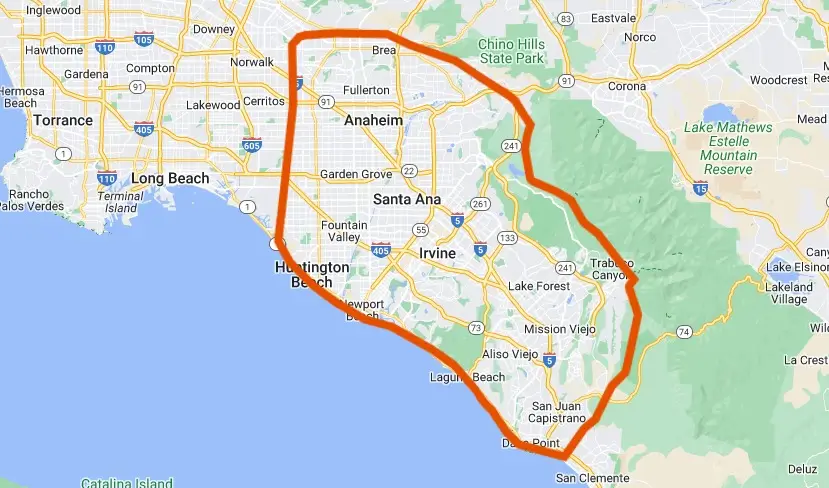
Yes. Cactus Appliance repairs LG dishwashers in Irvine, Tustin, Costa Mesa, Newport Beach, Santa Ana, Anaheim and every other Orange County city, same day, seven days a week.
Related guides and services
Recent LG dishwasher repairs
- GE Dishwasher Not Turning On: Control Panel Fix Lake Forest