On a Whirlpool or KitchenAid dishwasher from about 2010 to 2020, 6-1 means no fill, 8-1 and 8-2 no drain, 7-1 no heat, 4-3 and 4-4 the wash motor, 3-x the water sensor, 5-x the door, 2-2 the keypad link and 1-x the control board; without a display the Clean light blinks the pair. On a current display model the numbers moved: H2O is no water, F9E1 and F9E2 the drain, F7E2 the wash motor, F4E2 and F4E3 the heater, F8E4 a leak, F6E1 the user interface. Cut the power for a few minutes, check the supply valve, filter, drain hose and disposal plug, and run a cycle; a repeat needs a technician.
This page is written by a working technician at Cactus Appliance in Irvine, who repairs Whirlpool and KitchenAid dishwashers across Orange County. Whirlpool Corporation builds Whirlpool, KitchenAid, Maytag, JennAir, Amana and Kenmore 665 dishwashers on shared platforms: Whirlpool WDT, WDF and WDTA, KitchenAid KDTE, KDTM, KDPE and KDFE, Maytag MDB, JennAir JDB and JDTSS, and Amana ADB. Dishwashers built from about 2010 to 2020 share the first three tables. The current display generation (WDT750SAK, WDTA50SAK, KDTM604, KDPM604 and similar) uses a different map with its own table below; the last table covers lights-only panels and older models.
Try this first
- Cut the power. Five minutes unplugged or with the breaker off, then start a cycle; a code that returns is real.
- Open the supply valve. It must be fully open and the line free of kinks; run the faucet hot before you start.
- Clean the filter. Twist the cylinder filter out of the tub floor, rinse it and the flat screen under it, and clear the sump of glass and seeds.
- Check the drain path. The hose needs a high loop under the counter or an air gap. If a garbage disposal went in recently, make sure its knockout plug was punched out; in our experience this causes more 8-1 codes than a failed pump.
- Close the door firmly. A tall pot handle or a rack off its track keeps the latch from closing.
- Use the right detergent. A pod or a small dose only; foam hides water from the motor and the sensor.
How Whirlpool and KitchenAid dishwashers show errors
On models from about 2010 to 2020, every fault is a pair of numbers: a function code for the system (1 control, 2 keypad, 3 sensor, 4 wash motor, 5 door, 6 fill, 7 heater, 8 drain, 9 diverter, 10 dispenser and vent) and a problem code for the fault. A display shows the pair as F and E, so 6-1 appears as F6E1. A lights-only model blinks it on the Clean light (Start or Washing on some panels): first number, short pause, second number, longer pause, then again; count a full pattern twice. On the current display generation these numbers moved; see the fourth table.
A new cycle clears the display, but the control stores the last codes for the service diagnostic cycle, entered with a button sequence from the tech sheet (on older panels, Heated Dry, Normal, Heated Dry, Normal). It shows them at the start on some models and at the end on others; note them, because holding a key during the readout (or on some models finishing the cycle) clears them.
Fill, drain and water codes (2010 to 2020 models)
| Code | What it means | What to do |
|---|---|---|
| 6-1 (F6E1, 2010-2020) | Not filling: no water arrived in the time allowed. | Open the valve fully and straighten the line. With good pressure, the inlet valve or its screen has failed. |
| 6-2 (F6E2) | Inlet valve electrical fault: the control cannot drive the valve. | Cut power once. A repeat is the valve or its wiring. |
| 6-3 (F6E3) | Suds or air in the pump: too little water around the wash motor. | Dishwasher detergent only, less of it, and the 6-1 checks. A repeat is the inlet valve or the float. |
| 6-4 (F6E4) | Float switch open: too much water in the tub. | Close the supply valve. The inlet valve is sticking open or the float is jammed; call before the next cycle. |
| 6-6 (F6E6) | Incoming water too cold. | Run the faucet hot first and check it is on the hot line. A repeat is the thermistor. |
| 8-1 (F8E1, 2010-2020) | Slow drain: water still in the tub when the drain time ran out. | Filter, sump, hose, high loop and disposal plug. A repeat is the drain pump or the check valve. |
| 8-2 (F8E2, 2010-2020) | Drain pump electrical fault: the control cannot run it. | A pump that never hums at the start of a cycle is the pump or its wiring. |
Heater, sensor and motor codes (2010 to 2020 models)
| Code | What it means | What to do |
|---|---|---|
| 3-1 / 3-2 (F3E1 / F3E2) | The thermistor and optical water indicator (OWI), one sensor for temperature and water clarity, has failed (3-1) or is shorted (3-2). | Cut power once. A repeat is the sensor or its harness. |
| 3-3 (F3E3) | The OWI could not calibrate: the optical sensor cannot see through the water. | Clean the filter and wipe the sensor window on the tub floor. A repeat is the sensor or a drain check valve letting dirty water back into the sump. |
| 4-3 / 4-4 (F4E3 / F4E4, 2010-2020) | Wash motor fault: the control cannot run or talk to the circulation motor. | Clear the sump of anything that could jam the impeller. A repeat is the motor or its control. |
| 7-1 (F7E1) | Heater does not heat: no temperature rise with the element on; dishes come out wet. | Cut power once. A repeat is the element, its relay on the board or the thermistor. |
| 7-2 (F7E2, 2010-2020) | Heater stays on: the relay for the element is stuck closed. | Switch the breaker off and call; a stuck relay keeps heating with no water. |
| 9-1 / 9-2 (F9E1 / F9E2, 2010-2020) | Diverter valve, which switches water between spray arms: position not found (9-1) or motor stuck on (9-2). | Cut power once. A repeat is the diverter motor or its sensor. |
Control, door and dispenser codes (2010 to 2020 models)
| Code | What it means | What to do |
|---|---|---|
| 1-1 (F1E1) | Stuck relay on the control board. | Cut power once. A repeat is the board. |
| 1-2 (F1E2) | Control board memory error. | Cut power once. A repeat is the board. |
| 2-1 (F2E1) | Stuck button on the keypad. | Press each button once and dry the panel. A repeat is the user interface. |
| 2-2 (F2E2) | Keypad and control board not communicating. | Cut power once. A repeat is the ribbon connector, the keypad or the board. |
| 5-1 / 5-2 (F5E1 / F5E2) | The door was not closed within a few seconds of pressing Start, or the door switch has failed (5-1); the control never saw the door open between cycles (5-2). | Open and close the door fully, then press Start. If it only starts after a power cut, the latch switch is usually the repair. |
| 10-1 / 10-2 / 10-3 (FAE1 / FAE2 / FAE3) | Detergent dispenser (10-1), vent wax motor (10-2) or drying fan (10-3) electrical fault. | Cut power once. A repeat is that part or its wiring; the dishwasher still washes. |
Current display models, about 2020 on
| Code | What it means | What to do |
|---|---|---|
| F1E2 / F2E2 / F3E2 | Control board (F1E2), keypad link (F2E2), thermistor and OWI sensor (F3E2). | Same checks as 1-2, 2-2 and 3-1. |
| F4E2 / F4E3 | Heater not heating. | Same checks as 7-1. |
| F6E1 | User interface or main control fault, not a fill problem. | Cut power once. A repeat is the control. |
| F7E2 | Wash motor fault. | Same checks as 4-3. |
| F8E2 | Inlet valve electrical fault. | Same checks as 6-2. |
| F8E4 / F8E5 | A leak into the tray under the tub (F8E4) or an inlet valve stuck open (F8E5). | Close the supply valve, switch the breaker off and call. |
| F9E1 / F9E2 | Not draining (F9E1) or drain pump electrical fault (F9E2). | Same checks as 8-1 and 8-2. |
| FAE4 / F10E4 | Diverter valve fault. | Same checks as 9-1. |
| FAE5 / F10E5 | Diverter leaking into the base. | Close the supply valve, switch the breaker off and call. |
| H2O | No water detected. | Same checks as 6-1. |
Lights-only panels and older models
| Signal | What it means | What to do |
|---|---|---|
| Clean light flashing 7 times | Before the early 2010s, Kenmore 665 included: the water did not reach temperature in time. | Run the faucet hot first. A repeat is the element or the thermostat. |
| Start/Resume light flashing | The cycle was interrupted by an open door or a power dip. | Close the door and press Start. Not a fault. |
| Sanitized light blinking | The Sani Rinse did not reach sanitizing temperature. | Check the hot water supply. The dishes are washed, not sanitized; a repeat is the heater. |
Codes vary by model and year, and the same pair can have several causes. The tech sheet for your model number (on the label at the edge of the door) is the definitive list, and only an on-site test confirms the part.
What the common codes turn out to be
8-1 and 8-2: water left in the tub
Likely causes: a sump packed with glass and seeds, a disposal plug never removed, a hose with no high loop, a check valve held open by a seed, or a drain pump with a broken impeller or dead winding.
Try this first: clean the filter and check the disposal connection, then start a cycle and cancel it to force a drain.
How we fix it: we run the pump under power, clear the check valve and the hose, and replace a failed pump; see our Bosch E25 drain pump and Asko not draining write-ups.
4-3, 4-4 and 3-3: dishes come out dirty
Likely causes: a circulation motor that has seized or lost a winding, glass under the impeller, a motor control that no longer answers the board, or an OWI sensor so coated in film that it fails calibration (3-3) or reads clean water as dirty and runs long.
Try this first: clear the sump, wipe the sensor window and run a cycle; a healthy wash motor is clearly audible.
How we fix it: we test the motor and its control and replace the pump assembly when it is the cause; see our KitchenAid circulation pump repair.
7-1 and the seven-blink Clean light: not heating, not drying
Likely causes: an element with an open coil or a burned terminal, a heater relay that no longer closes, a drifted thermistor, or a dishwasher plumbed to the cold line.
Try this first: run the faucet hot first and pick Heated Dry; wet dishes at the end mean no heat.
How we fix it: we measure the element resistance and the relay output and replace the element or the board.
2-2, 1-1 and 1-2: a dead or erratic panel
Likely causes: steam behind the keypad from a worn door vent, a ribbon connector loosened by door slams, a board with a stuck relay or corrupted memory, or an open thermal fuse.
Try this first: cut power for five minutes. If some buttons work and others do not, or lights come on by themselves, call.
How we fix it: we test the keypad and the board separately, because replacing the wrong one is the expensive way to find out; see our GE control panel repair.
Stay safe. Switch the breaker off before you remove the kick plate or reach under the tub: the heater, the pump and the junction box sit in standing water. Never bypass the door switch or the float. A burning smell, a melted spot on the panel or water on the floor means leave the breaker off and call.
When a code means a part has failed
The service call is $79 and covers the trip and the diagnosis. You get a written price for parts and labor before work starts, and the $79 is applied to it when you approve. Common parts such as drain pumps and inlet valves are usually on the van; others come from local distributors, usually the next business day. Parts and labor are under warranty; if the same fault returns within 90 days the return visit has no service-call fee.
Dishwasher repairs we have written up
- KitchenAid Dishwasher Not Cleaning? Circulation Pump Fix (January 2025), Orange County
- Why Is My Asko Dishwasher Not Draining? (October 2026), Orange County
- Bosch Dishwasher E25 Error: The Drain Pump Fix (September 2026), Orange County
- GE Dishwasher Not Turning On: Control Panel Fix (August 2026), Orange County
Whirlpool and KitchenAid dishwasher error code FAQ
How do I reset a Whirlpool or KitchenAid dishwasher?
Unplug it under the sink or switch its breaker off. Five minutes off, then start a cycle. There is no reset button; a code that returns after that is a real fault.
What does 6-1 or F6E1 mean?
On a 2010 to 2020 model, the dishwasher is not filling: open the supply valve fully and check the line; with good pressure, the inlet valve or its screen has failed. On a current display model no water shows as H2O; F6E1 there is a user interface or control fault: cut the power once and call if it returns.
What does 8-1 or 8-2 mean?
8-1 is a slow drain and 8-2 a drain pump the control cannot run: clean the filter, check the hose, high loop and disposal plug; a repeat is the pump or the check valve. On a current display model those faults are F9E1 and F9E2; F8E2 there is the inlet valve and F8E4 water in the tray under the tub, so switch the supply off.
Can I keep using the dishwasher with a code showing?
With 6-1, 8-1, 3-3 or a 10-x code you can usually run another cycle after the checks above. With 6-4 or 7-2 on an older model, F8E4, F8E5 or FAE5 on a current one, or water on the floor, switch the breaker off, close the supply valve and stop: an overfill, a leak or a heater stuck on causes real damage.
How much does it cost to fix a Whirlpool or KitchenAid dishwasher error code?
The service call is $79, applied to the repair. A blocked sump, a hose or a disposal plug is the affordable end; an inlet valve, a drain pump or a heating element is the middle; a wash motor or a control board is the expensive end.
Do you repair Whirlpool and KitchenAid dishwashers in Orange County?
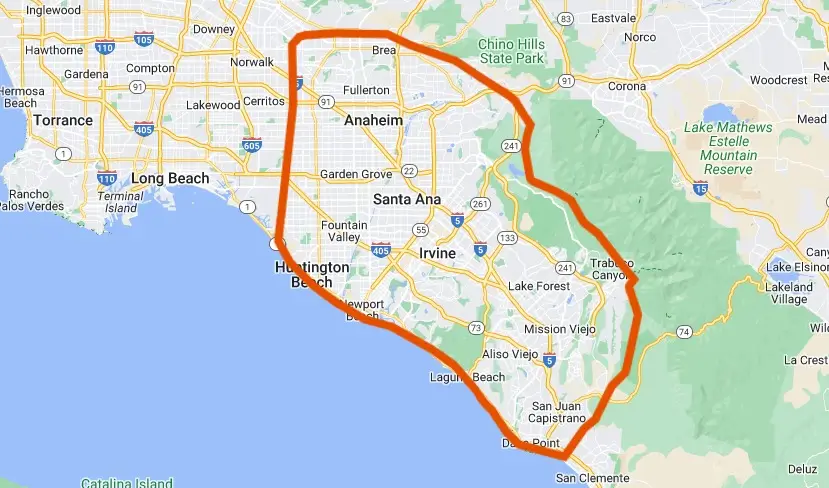
Yes. Cactus Appliance repairs Whirlpool, KitchenAid, Maytag, JennAir, Amana and Kenmore dishwashers in Irvine, Tustin, Costa Mesa, Newport Beach, Santa Ana, Anaheim and every other Orange County city, same day, seven days a week.
Related guides and services
Recent Whirlpool dishwasher repairs
- GE Dishwasher Not Completing Cycle: UI Control Fix San Clemente