On a GE oven or range, F7 usually means a key on the control panel reads as stuck, F0 and F1 are mostly a fault inside the control, on some models a stuck key,F2 means the oven got hotter than the control allows, F3 and F4 mean the oven temperature sensor reads open or shorted, F5, F6 and F8 are faults inside the control itself, F9 and FC mean the self-clean door lock did not do what it was told, PF is a power failure and LOC is the control lock, not a fault. Press Clear/Off, cut power for five minutes, check the latch and the keypad, then try a bake. A code that comes back usually means a failed part and needs a technician.
This guide is written by a working technician at Cactus Appliance in Irvine, which repairs GE ovens and ranges across Orange County. It covers the F codes and display messages on GE, Profile, Cafe and Monogram wall ovens and ranges, what each usually turns out to be on a visit, and what you can safely check first. The F codes have stayed much the same across GE, Profile, Cafe and Monogram controls; newer controls add a second digit on some faults.
Try this first
- Press Clear/Off, then cut power at the breaker. A gas range can be unplugged if you can reach the outlet without pulling the range and straining the gas connector. Wait five minutes, set the clock, try a bake.
- Look at the keypad. Nothing leaning on it, and wipe it dry; moisture under the glass after cleaning or a steamy self-clean is the usual stuck key.
- Check the door and the latch. The door should close fully and the latch arm at the top of the opening should move freely. A door locked after a self-clean releases when the oven cools; never pry it.
- Look at the oven sensor, the thin metal probe at the upper back of the cavity. If a rack has bent it or it hangs loose, note it, but do not pull on it.
- PF or bAd LinE? PF only wants the clock set. bAd LinE means the outlet or junction box is wired wrong: leave the breaker off and call an electrician.
- On a double oven, note which cavity the code names. Upper and lower have their own sensor and lock.
How GE ovens show errors
Most GE ovens show the letter F and one or two characters on the clock display, beep every few seconds and switch the heat off. Press Clear/Off to silence it; if the fault is still there, the code returns at the next bake or the next keypad scan. Older controls used one character; newer controls add a second digit on some faults: a door lock fault can appear as F90 to F97 as well as F9, and many double ovens use F30 to F33 (sensor open or shorted, upper or lower) alongside F3 and F4; text displays add a short description.
Two displays that are not faults come up often: PF after a power outage, which only asks for the clock, and LOC or a padlock, the control lock. There is no code history an owner can read, so write down the code and what the oven was doing before you reset.
Keypad and temperature sensor codes
| Code | What it means | What to do |
|---|---|---|
| F0 / F1 | On many GE controls a fault inside the control itself: it failed its own temperature circuit check. On some controls, a key reads as pressed when nothing touches it. | Clear/Off, wipe the panel, power cycle. If it returns with a dry panel, the keypad or the control board has failed; a ribbon test tells which. |
| F7 | Stuck or shorted key: a key held too long, a shorted keypad, or a loose or corroded ribbon cable between the keypad and the control. | Power cycle and press each key once. If F7 returns, the keypad, the ribbon connection or the control needs service. |
| F2 | Oven over-temperature: the control measured a temperature above its bake limit, or above the self-clean limit. A sensor reading high, or a relay stuck closed so the heat stays on. | Clear/Off, breaker off, let it cool. If F2 returns or the oven overheats again, stop using it and call. |
| F3 | Open oven temperature sensor: the probe, its plug behind the back panel, or the harness reads open. | Power cycle once. If F3 returns, the sensor or its connector needs replacing; an affordable part on most GE ovens. |
| F4 | Shorted oven temperature sensor: a failed probe or a pinched harness. | Power cycle once. If F4 returns, the sensor or the harness needs replacing; the oven will not bake until it does. |
Control and door lock codes
| Code | What it means | What to do |
|---|---|---|
| F5 | Control logic fault: the electronic control failed one of its internal checks. | Power cycle. If F5 returns, the control board is almost always the part; we check the supply voltage and the board connectors before replacing it. |
| F6 | Control fault: a failed electronic control on the GE lines that list F6; many GE code lists skip it. | Power cycle once. If it returns, the control board is the part. |
| F8 | Control component fault: a part inside the control, such as its memory, failed a self-test. | Power cycle once. A repeat means a control board replacement. |
| F9 | Door lock fault: the self-clean lock motor did not reach the locked or unlocked position in time, or the lock switches disagree with the control. | Door closed, oven cool, power cycle; never force a locked door. If F9 returns, the lock motor, its switch or the wiring needs service. |
| FC | Door lock circuit fault: a wrong signal from the lock circuit, from a failed switch, a miswired lock or a shorted harness. | Power cycle once. If FC returns, the lock assembly or its harness needs a test. |
| F90 to F97 | Door lock faults on two-digit controls, often wall ovens and double ovens: F9 split into a family, with F96 the one we hear about most. All point at the lock motor, its position switches or the wiring. | Same as F9: door closed, oven cool, power cycle. If it returns, book a visit. |
Power faults and displays that are not errors
| Code | What it means | What to do |
|---|---|---|
| PF | Power failure: the oven lost power and the clock needs setting. Not a fault. | Clear/Off and set the clock. If PF appears with no outage, the cord, the outlet or the junction box connection is loose. |
| bAd LinE | The control has detected wrong wiring at the outlet or junction box, usually line and neutral reversed or a missing neutral. It shows up after an installation or electrical work. | Breaker off; have an electrician check the connection. The range itself is usually fine. |
| LOC / padlock | Control lock: the keypad is locked so no one can start the oven. Not a fault. | Hold the lock control for three seconds: on most models the Lock Controls pad, on older controls without a lock pad the 9 and 0 pads pressed together; newer touch displays have it under Settings. |
| SAb | Sabbath mode: the oven holds a bake temperature with tones off, only the Sabbath bracket symbols on the display, and on most models the oven light off. Many models show SAb; text displays write it out. | On older controls the special features menu, reached by holding Bake and Broil together until SF appears, turns it on and off; newer touch controls have it under Settings. |
| Demo mode | Showroom mode: the display and lights work but no element or burner heats. The wording varies by model. | Exit through the settings menu, or the key sequence in your manual. If you cannot find it, we turn it off on a visit. |
Codes and their meaning vary by model and production year, and the same code can have more than one cause. The owner’s manual for your model number (on the label inside the oven door frame) is the definitive list, and only an on-site test confirms which part has failed.
What the common codes turn out to be on a service call
F2, F3 and F4: the oven sensor and the control
Likely causes: a sensor probe that has drifted or failed, a burned plug behind the back panel, a harness pinched when the range was pushed in, or, for F2 with a scorching oven, a bake relay welded closed so the element never switches off.
Try this first: Clear/Off, breaker off, let it cool. Note whether the oven was actually hotter than the setting.
How we fix it: we measure the sensor at the control and at the probe to separate it from the harness, watch the relay output, and replace the one that failed. A board that quietly stopped heating is in our write-up of an oven in Santa Ana that would not heat; the same board failing the other way gives F2.
F7, and sometimes F1: the keypad
Likely causes: a membrane key shorted by moisture or grease, a ribbon cable that has loosened or corroded, or a control that misreads a clean keypad. F1 is often the control itself rather than a key, and on many GE ranges the keypad and the control are one assembly, so a stuck key can mean a control replacement.
Try this first: dry the panel and leave the breaker off for an hour so moisture under the glass evaporates.
How we fix it: we unplug the keypad from the control and watch whether the code returns; if it does, the control is at fault, and if it stops, the keypad is.
F9, FC and F96: the door lock
Likely causes: a lock motor that stalls, a lock switch that no longer reports position, a latch arm bent by a forced door, or a harness rubbed through behind the panel; most show up right after a self-clean.
Try this first: let the oven cool completely, close the door firmly and power cycle; do not unlock it by hand.
How we fix it: we run the lock motor through its travel, test the switches, and replace the lock assembly or the switch. A bent latch arm is aligned before anything else is condemned.
No code, but the oven will not heat
Likely causes: on a gas oven a weak bake igniter that glows but never opens the gas valve, on an electric oven an open element or a bad terminal block connection, on either a control relay.
Try this first: watch through the door. An igniter that glows for more than a minute with no flame is the igniter; an element that stays dark is the element or its relay.
How we fix it: we measure the igniter current and the element resistance. The gas version is written up on another brand in Whirlpool oven not heating: bake igniter fix, and a surface burner on an Electrolux range in Orange is the cooktop version of the same visit. Our GE Monogram microwave magnetron repair is a microwave, not an oven, but the same kind of visit: a part that quietly stopped heating.
Stay safe. Switch the breaker off before you touch anything behind the control panel or the back of the range; an electric oven runs on 240 volts. Never work on a gas valve, a gas connector or a regulator, and if you smell gas, leave the house and call the gas company first. Never force a self-clean lock. A microwave stores a lethal charge in its high-voltage section even when unplugged.
When a code means a part has failed
The service call is $79 and covers the trip and the diagnosis. We confirm the failed part by testing it, not by reading the code, because an F2 can be a sensor or a control board. You get a written price for parts and labor before any work starts, and the $79 is applied to it when you approve. Common parts such as oven sensors and igniters are usually on the van; the rest, including control boards and touch panels, come from local distributors, usually the next business day. Parts and labor are under warranty, and if the same fault returns within 90 days the return visit has no service-call fee.
Oven and range repairs we have written up
- GE Monogram Microwave Not Heating: Magnetron Fix (July 2026), Orange County
- Oven Not Heating? Bad Control Board Fix in Santa Ana (July 2026), Santa Ana
- Whirlpool Oven Not Heating: Bake Igniter Fix (October 2026), Orange County
- Electrolux Range Burner Not Heating: One Repair (October 2026), Orange
GE oven and range error code FAQ
How do I reset a GE oven error code?
Press Clear/Off, then switch the oven off at the breaker for five minutes. If the code returns when you start a bake, the fault is real.
What does F2 mean on a GE oven?
F2 means the control measured an oven temperature above its limit. Either the sensor reads high or a relay on the control is stuck so the heat never switches off; if the oven was truly overheating, stop using it until it is repaired.
What do F3 and F4 mean on a GE oven?
F3 is an open oven temperature sensor circuit and F4 a shorted one. The probe at the back of the oven, its plug or the harness has failed, and the oven will not bake until it is replaced.
What does F9 or F96 mean on a GE oven?
Both are door lock faults: the self-clean lock did not lock or unlock when the control asked. Let the oven cool and power cycle; a code that returns is the lock motor, its switch or the wiring.
Can I keep using the oven with an F code on it?
With a keypad code, PF or the control lock, yes, once it clears. With F2, or any time the oven heated on its own, switch the breaker off and wait for the visit; an element that will not shut off is a fire risk.
How much does it cost to fix a GE oven error code?
The service call is $79, applied to the repair. An oven sensor or an igniter is the affordable end; a lock motor or a keypad is the middle; a control board or a touch panel is the expensive end.
Do you repair GE ovens and ranges in Orange County?
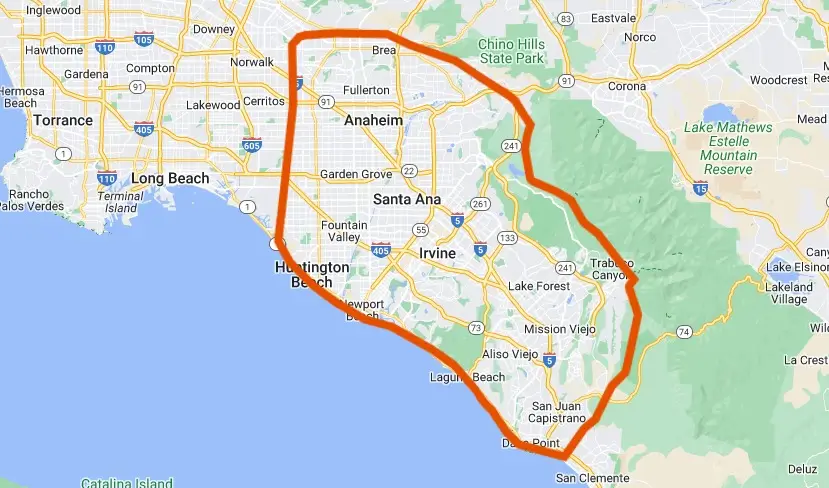
Yes. Cactus Appliance repairs GE, Profile, Cafe and Monogram ovens and ranges in Irvine, Tustin, Santa Ana, Costa Mesa, Anaheim and every other Orange County city, same day, seven days a week.