On a Samsung range or wall oven, C-20 to C-23 are the oven temperature sensor, C-d1 is the door lock, C-d0 and SE (5E) are a stuck key, C-F0 and C-F2 are the boards not talking to each other, C-F1 is the main board memory, C-A1 is the cooling fan, and Loc, SAb and tESt (dEMo on some models) are control lock, Sabbath mode and demo mode, not faults. Switch the breaker off for a minute, check for demo mode, close the door and press Off. A code that returns on the next bake is a failed part, and an oven that heats with nobody controlling it is a breaker-off-and-call problem.
Written by a working technician at Cactus Appliance in Irvine, from the Samsung ranges and ovens we repair across Orange County: the NE electric and induction ranges, the NX gas ranges and the NY dual-fuel ranges, freestanding and slide-in, the Flex Duo models and the NV wall ovens. Below: the documented Samsung codes, what we usually find behind them, and what you can check before you book.
Try this first
- Cut power at the breaker. A range has no reset button. Switch its breaker off, wait one minute, switch it on and set the clock. A one-time glitch clears; a failed part brings the code back on the next bake.
- Check for demo mode. If the display and the timer work but the oven will not heat, the range may be in demonstration mode: tESt, tE5t or dEMo on the display. The manual lists the button combination to exit it.
- Press Off and close the door. A door that is not fully shut, a rack against the door switch or a latch left in the locked position after self-clean all stop the oven.
- Check the settings. A delayed start, a cook-time timer that ran out, Sabbath mode or control lock all look like a dead oven.
- Electric range: check both legs. The clock and the lights run on 120 V, the elements need 240 V. If the display works but nothing heats, the double-pole breaker may have tripped on one side; switch it fully off and on.
- Gas range: check the supply. If the range was just installed or moved, the shutoff valve may be closed; if you can see it without moving the range, the handle should be in line with the pipe. Do not pull the range out or touch anything else on the gas side.
How Samsung ovens and ranges show errors
Current Samsung ranges and wall ovens show a code on the clock display in the form C- followed by two characters, such as C-20 or C-d1. Older Samsung ranges used E- codes, such as E-27, and a few keypad faults show as SE or 5E, the same code Samsung microwaves use for a shorted key. The oven usually beeps and stops heating when a code appears. Pressing Off or Clear removes the code from the display and the breaker clears the rest; a real fault returns within the first few minutes of the next bake or self-clean, so photograph the code before you clear it.
Three displays are modes rather than faults and generate a lot of searches: Loc or a padlock is the control lock, SAb is Sabbath mode, and tESt, tE5t or dEMo is demonstration mode, where the display works but the oven does not heat.
Messages that are not fault codes
| Code | What it means | What to do |
|---|---|---|
| Loc / LOC / padlock | Control lock: the panel ignores button presses so children cannot start the oven. | Hold the Lock button, or the button pair the manual names, for about three seconds until the padlock goes out. |
| SAb | Sabbath mode: the oven holds its bake temperature while the display freezes on SAb and the oven light and the tones are disabled, for religious observance. | Hold the button the manual names for Sabbath mode for about three seconds to exit. |
| tESt / tE5t / dEMo | Demonstration mode, as on a showroom floor: tESt or tE5t on current models, dEMo or a d before the clock on some older panels. The display and the controls work but the oven and the electric cooktop do not heat; gas surface burners still light. | Exit it with the button combination in the manual; it differs between models. If the oven still will not heat after that, book a visit. |
| Hot / H / Hot Surface | Cooktop residual heat indicator on electric and induction models: a zone is still too hot to touch. | Not a fault; it goes out when the glass cools. A light that stays on with the glass cold is usually a stuck contact in one element’s temperature limiter or its switch; on induction the generator board drives the H. |
Temperature sensor and heating codes
| Code | What it means | What to do |
|---|---|---|
| C-20 / C-21 | Oven temperature sensor error: the sensor in the main cavity reads open or shorted, so the control cannot regulate the heat. | Switch the breaker off for a minute and retry. If it returns, the sensor or its connector has failed and needs a technician. |
| C-22 / C-23 | Temperature sensor error for the second cavity: the lower oven on a double oven, or the second zone behind a Flex Duo divider. | Same check as above. A repeat is the second sensor or its wiring. |
| E-27 / E-28 | Oven temperature sensor error on older Samsung ranges that use E codes: the sensor reads out of range. | Breaker off for a minute, retry. A repeat is the sensor or its connector. |
| C-A1 / C-A2 | Cooling fan error: the brushless fan that cools the control panel is not running or its speed feedback is missing. C-A2 is the same fault on the cooling or air-intake motor, on single ovens as well as double ovens. | Breaker off, retry. A repeat is the fan motor or its wiring; running the oven without that fan cooks the control board. |
Door, keypad and control board codes
| Code | What it means | What to do |
|---|---|---|
| C-d0 | Keypad error on most current models: a key reads as pressed or shorted for too long. | Press each key once, dry the panel, cycle the breaker. A repeat is the touch panel or the membrane behind it. |
| C-d1 | Door lock error: the latch motor did not lock or unlock the door for self-clean, or the control cannot see its position. | Let the oven cool, then cycle the breaker. If the door stays locked or the code returns, the lock motor or its switch needs replacing. |
| SE / 5E | Shorted key: a button in the keypad is stuck closed. The same code appears on Samsung microwaves. | Press each button, cycle the breaker. A repeat is the keypad or the touch panel. |
| C-F0 / C-F2 | Communication error between boards: C-F0 between the main board and the sub board, C-F2 between the touch panel and the main or sub board; the first check is usually the touch-film ribbon at the board connector. | Cycle the breaker. A repeat is a loose connector, a harness or one of the boards, and needs an on-site test. |
| C-F1 | EEPROM error: the main board cannot read its own memory. | Cycle the breaker once. A repeat means the main board has failed. |
Range and oven codes vary by model and production year; the C-, E- and two-letter formats above overlap across generations. The owner manual for your model number, on the label at the oven door frame, is the definitive list. Only an on-site test confirms the failed part, and we run that test before any part is ordered.
What the common codes turn out to be on a service call
C-20 to C-23: oven not holding temperature
Likely causes: an oven sensor that has drifted or opened, a connector behind the back panel burned by heat, or a relay on the control board that sticks.
Try this first: if the oven runs hot or cold with no code, an oven thermometer on the middle rack at 350 for 20 minutes. A steady offset of 25 degrees or more is the sensor or the temperature adjustment setting. A normal oven cycles 25 to 50 degrees around the set point; swings well beyond that, or an oven that climbs past the set point and keeps going, point at a board relay.
How we fix it: we measure the sensor at room temperature and hot, then replace the sensor or the board. The same symptom on other brands is in our Viking oven thermostat repair and the control board replacement in Santa Ana.
No code, no heat: elements, igniters and the board
Likely causes: a bake element with a visible break or blister, a broil element that has opened, a gas bake igniter that glows but no longer draws enough current to open the gas valve, or a relay on the control board that has failed.
Try this first: set Bake and watch. An electric element that stays dark, or a gas igniter that glows for a minute and a half or more without a flame, or lights late and then drops out, is usually the part.
How we fix it: we measure the element or the igniter under load and replace it; common parts such as the bake element and the igniter are usually on the van. The gas version is written up in our Whirlpool bake igniter repair; a Samsung igniter fails the same way.
C-d1: door locked after self-clean
Likely causes: a latch motor that stalled, a lock switch that no longer reports the latch position, a latch arm bent by a forced door, or a control board that lost track of the lock after a power blip.
Try this first: let the oven cool completely, then switch the breaker off for a minute. Many locks release on the restart. Never pry the door; the latch and the glass both lose.
How we fix it: we release the latch by hand from behind the panel, test the motor and the switch, and replace the lock assembly when it has failed.
A burner or a cooktop element that will not heat
Likely causes: on an electric range a radiant element or its infinite switch, on an induction range the coil or the generator board, on a gas range a wet or cracked igniter, a clogged burner port or a spark module. None of these show a code.
Try this first: swap in a known-good pan on induction, dry the gas burner after a boil-over, and check that the burner cap sits level.
How we fix it: we test the element, switch, igniter or module and replace it. A typical job is in our Electrolux range burner repair in Orange; the Samsung parts differ, the diagnosis does not.
Stay safe. Switch the breaker off before you touch anything behind the back panel; an electric range carries 240 V and the terminals stay live with the oven off. If you smell gas, do not operate switches, leave the house and call the gas company before you call us. Never bypass the door lock, the thermal fuse or the cooling fan, and leave the gas valve, the regulator and the igniter wiring to a technician.
When a code means a part has failed
We charge $79 for the visit, which covers the trip and the diagnosis, and that $79 comes off the repair once you approve the written quote. A C-20 can be a sensor or a connector scorched behind the back panel, so we measure the sensor hot and cold and inspect the harness before naming the part. The quote covers parts and labor and does not change. Common parts such as oven sensors, bake elements and igniters are usually on the van; control boards, touch panels and lock assemblies come from local distributors, usually the next business day. Parts and labor are under warranty, and a fault that returns within 90 days gets a return visit with no service-call fee.
Oven and range repairs we have written up
- Oven Not Heating? Bad Control Board Fix in Santa Ana (July 2026), Santa Ana
- Whirlpool Oven Not Heating: Bake Igniter Fix (October 2026), Orange County
- Electrolux Range Burner Not Heating: One Repair (October 2026), Orange
- Viking Oven Not Holding Temperature? Thermostat Fix (May 2024), Orange County
Samsung oven and range error code FAQ
How do I reset a Samsung oven or range?
Press Off, then switch the breaker off for one minute and back on. If the code returns on the next bake or self-clean, a part has failed and another reset will not help.
What does C-20 or C-21 mean on a Samsung oven?
C-20 and C-21 are oven temperature sensor errors: the sensor in the cavity reads open or shorted. Cycle the breaker; if it returns, the sensor or its connector needs replacing.
What does C-d1 mean, and why is the door locked?
C-d1 is a door lock error: the latch did not lock or unlock, usually around a self-clean cycle. Let the oven cool, cycle the breaker, and never pry the door. If it stays locked, the lock motor or its switch has failed.
Why does my Samsung oven show tESt and not heat?
tESt, tE5t or dEMo means the range is in demonstration mode: the display works but the oven and the electric cooktop do not heat; gas surface burners still light. The manual for your model lists the button combination to exit it, and the range heats normally afterward.
Can I keep using the range with an error code on it?
With Loc, SAb, tESt or a keypad code you can, once the mode is cleared. With a sensor, door lock or cooling fan code, stop using the oven until it is repaired; an oven without temperature control or panel cooling damages itself.
How much does it cost to fix a Samsung oven error code?
The visit is $79, credited to the repair. A sensor, an igniter or a bake element sits at the affordable end, a door lock or a touch panel in the middle, a control board at the expensive end; the written quote comes before any work.
Do you repair Samsung ovens and ranges in Orange County?
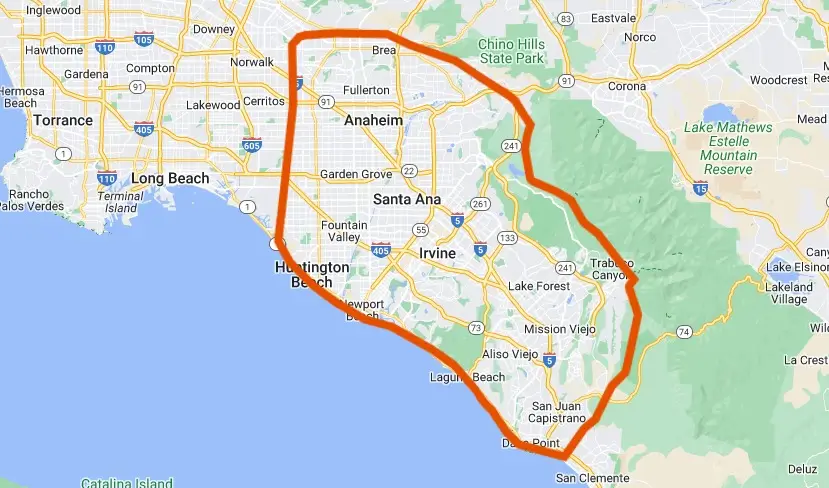
Yes. Cactus Appliance repairs Samsung electric, gas, dual fuel and induction ranges and Samsung wall ovens throughout Orange County, from Irvine and Tustin to Santa Ana, Brea and San Clemente, same day, seven days a week.